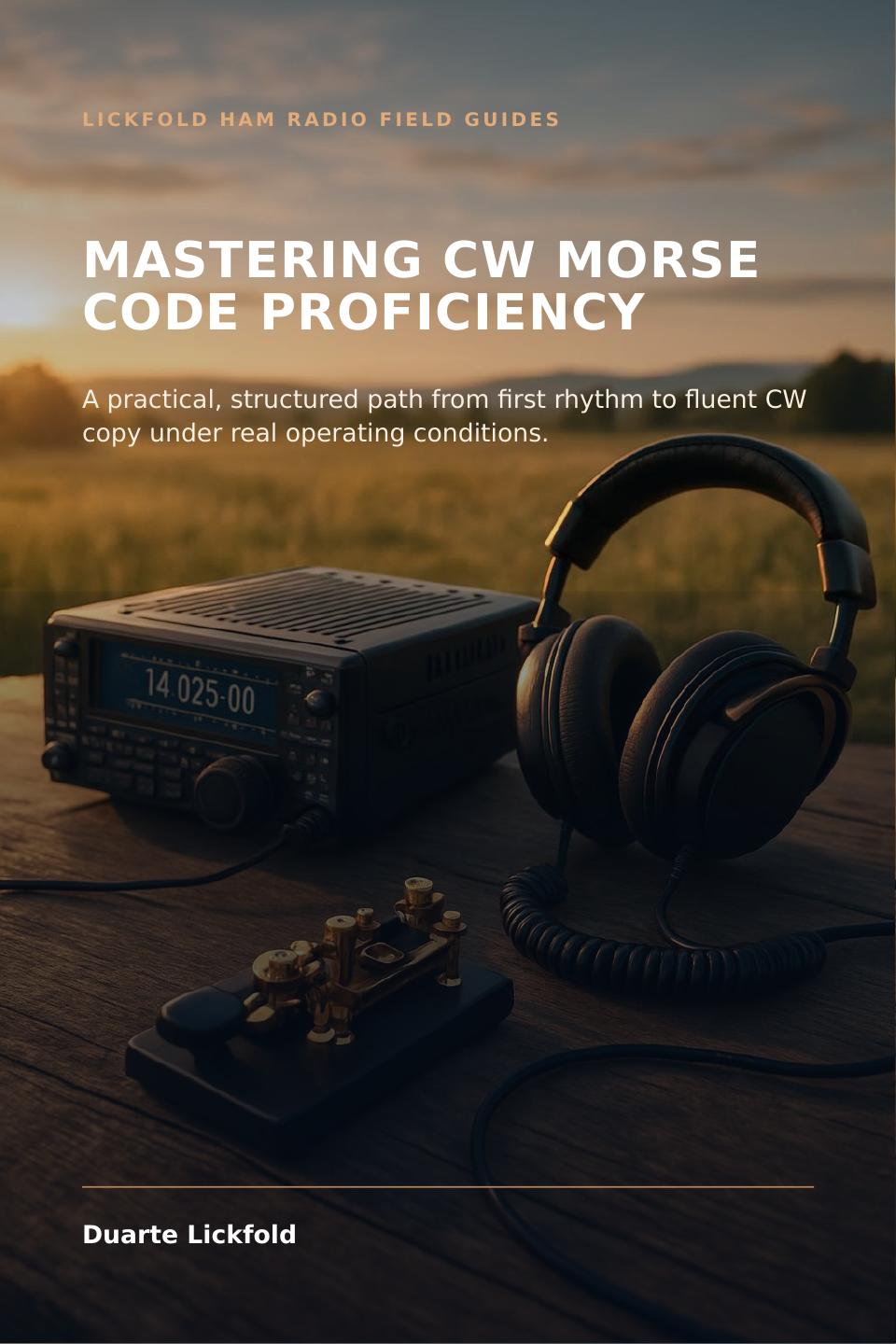

Learning CW is a plan, not luck. A structured plan gives you a path that scales from first rhythm to fluent copy under real operating conditions. The book Mastering CW Morse Code Proficiency by Duarte Lickfold embodies that plan with a clear, drill-based framework that translates practice into measurable gains. It starts with foundations, then builds toward field readiness through repeatable drills, precise timing, and practical workflows.
One of the core ideas in the book is to treat practice as an iterative system. It begins with a four‑week baseline to establish a reliable 5 WPM level. This is not a mystical speed sprint but a disciplined, methodical process: quiet practice, a one-minute copy drill, and careful logging. The four weeks of routine drills create the nerve paths that make higher speeds possible. Along the way, the book introduces a precise timing convention (PARIS) that ties dot length, dah, intra-character spacing, inter-letter gaps, and inter-word gaps to a simple formula. This standardization matters because consistency across keyboards and interfaces is what preserves accuracy when you raise the speed. Farnsworth spacing is not just a gimmick; it is given a concrete formula so you can predict the effective WPM and calibrate your keyer and tempo accordingly.
The practice toolkit is another strength of the book. It lays out three decision axes for getting started: hardware choices (straight keys, bugs, paddles) with ergonomic notes; electronic keyers and timing interfaces; and practice libraries including texts, transcripts, and audio. Readers are guided to set up a compact, portable practice rhythm—fifteen minutes per session with a Farnsworth warm-up, phrase drills, and a post-session review. The emphasis on logging is practical: a simple scheme captures date, target WPM, actual WPM, drill type, accuracy, and mistakes. That structured logging becomes the backbone for subsequent chapters, where timing, speed, and on-air copy are harmonized.
As you move into speed and real world copying, the book shifts to reading real signals. It teaches you to copy callsigns, Q signals, and ragchews with a robust transcription and verification framework. It also introduces two accuracy metrics—Character Accuracy and Token Accuracy—so you can distinguish between pure letter recognition and procedural correctness during prosign and punctuation use. The discussion of disambiguation drills and transcript verification is concise and actionable, helping you fix persistent errors without getting lost in noise.
A practical dimension of Mastering CW Morse Code Proficiency is its field readiness. The later chapters connect practice to operation: logging, etiquette, and equipment care are treated as essential skills, not afterthoughts. A field checklist, power management tips, and a focus on RF safety ensure that you bring the same discipline to the field as you do to the bench. The book does not pretend that speed alone is enough; it argues for a holistic approach where copy accuracy, prompt acknowledgments, and clear signaling keep communications readable even under less-than-ideal conditions.
The mastery assessment in the final chapter is a clear milestone. It prescribes a 25 WPM PARIS mastery protocol, but it also emphasizes practical remediation and ongoing growth. Readers are given CSV scoring templates, remediation blocks for error types, and a plan for continuing training beyond the 20 WPM target. The structure is purpose-built: you practice with a single variable at a time, measure the impact, and iterate toward higher performance while preserving reliability.
If you want a resource that translates the discipline of CW practice into real-world capability, this book delivers. It is not a collection of anecdotes or hearsay; it is a blueprint for consistent, testable progress. Mastering CW Morse Code Proficiency provides a repeatable drill framework, a precise timing model, and a field-ready mindset that can serve you whether you’re ragchewing with a local club, DXing from a portable station, or contesting from a field site. For anyone serious about building CW proficiency with verifiable results, the book is a practical, credible guide that puts the right emphasis on timing, practice structure, and field discipline. In short, it respects the craft and offers a proven path forward. If your goal is measurable improvement and dependable field performance, this is the book to start with.
Explore the Book
Continue learning with MASTERING CW MORSE CODE PROFICIENCY by Duarte Lickfold, published by Lickfold Digital Publishers.