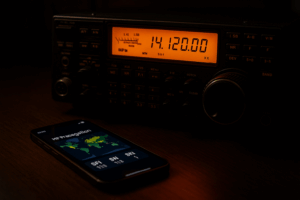
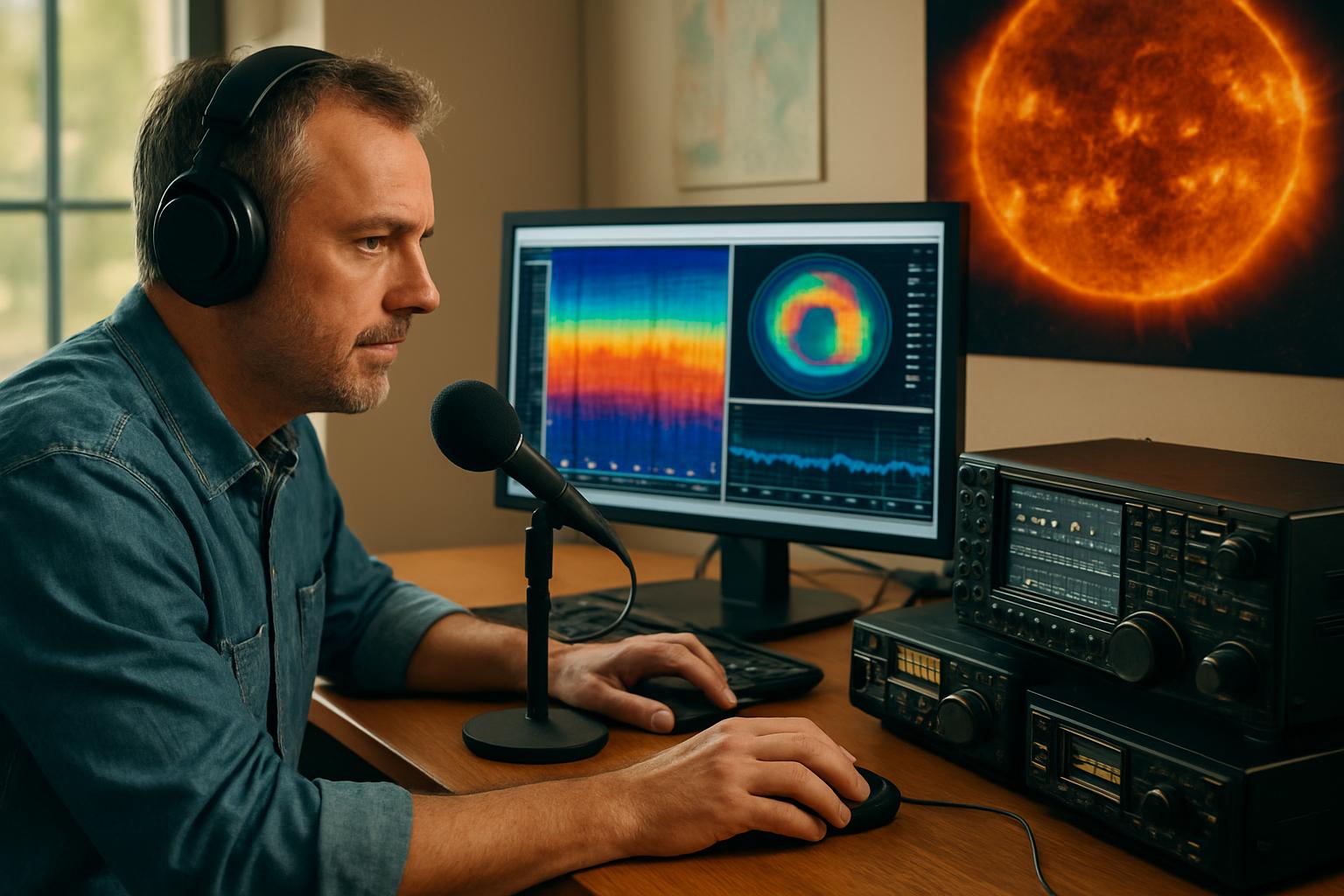

Overview: Space weather, ionospheric propagation, and the 2026 operating environment
HF propagation on the 10–12 meter band is shaped by the state of the ionosphere, the solar wind, and geomagnetic conditions. In 2026, operators are watching a cycle that can produce usable paths from roughly 28 to 30 MHz under favorable conditions, particularly when daylight and sunspot-related indices align with geomagnetic quietude. The practical takeaway is simple: by interpreting space weather indicators alongside forecasted ionospheric performance, a station can plan for openings rather than chase luck. This article explains how VOACAP and NOAA SWPC data work together to improve prediction fidelity for 10–12 meter openings and how to apply those predictions to real-world DX planning.
For context on contemporary favorable conditions and near-term forecasts, reference material from industry and amateur communities summarizes how space weather trends influence band openings. In November 2026, ARRL reports highlighted favorable 10–12 meter openings in the near term, underscoring the relevance of predictive tools for planning. See the ARRL Solar Update for current commentary on solar activity trends and their effects on hands-on operating opportunities. ARRL Solar Update.
VOACAP: What it is and how it informs 10–12 meter planning
VOACAP is a propagation prediction tool that estimates the probability of successful radio paths between a transmitter and a receiver under specified conditions. On the 10–12 meter band, VOACAP uses models of the ionosphere, sunspot activity proxies, and solar indices to generate maps and performance indicators for given times of day and seasons. The online tools offer two principal modes: a live mode that reflects current space weather and a planner mode that uses forecasted conditions. For HF DX planning, this distinction is crucial: live VOACAP outputs reflect near-term realities, while planner outputs help you schedule operations during predicted favorable windows.
The VOACAP platform provides dedicated pages for the 11 meter range and a more general propagation planner. Operators can compare live results with planner forecasts to identify days and times when 10–12 meters are likeliest to perform well toward their target regions. See VOACAP’s 11 meter resources for a band-specific perspective: VOACAP 11m, and consult the complete Propagation Planner Users Manual for workflow details and interpretation guidelines.
NOAA SWPC data: What to watch for 10–12 meter planning
The Space Weather Prediction Center (SWPC) provides space weather data essential for understanding when ionospheric conditions may favor or hinder high-frequency propagation. While VOACAP translates many of these indicators into a usable forecast, it helps to be familiar with the key inputs SWPC provides. Notable indicators include solar flux proxies, geomagnetic indices, and solar wind conditions that influence ionospheric height, electron density, and radio-wave refraction. Weekly and daily forecasts inform both live VOACAP runs and planner scenarios, helping shift planning away from guesswork toward data-informed decisions. For reference during the planning cycle, consult the weekly products and related forecasts produced by SWPC, such as PRFs that summarize predicted conditions for the coming days.
To view a representative SWPC product that is commonly referenced in planning discussions, you can access the public weekly forecast documents. These materials complement VOACAP outputs by providing context on how space weather is evolving over time. See the NOAA SWPC product archive, including recent weekly forecast and advisory documents, for a sense of typical content and delivery cadence. For a concrete example from 2026, reference the publicly available weekly report: PRFs of SGD (November 2026).
Integrating live VOACAP outputs with planner forecasts: a practical workflow
Effective 10–12 meter planning combines real-time space weather signals with forecasted conditions. Here is a practical workflow to align VOACAP predictions with NOAA SWPC inputs without relying on guesswork:
- Establish your operating scenario: identify your QTH, typical operating hours, and target regions. Note that 10–12 meter openings are often more favorable for daylight paths due to ionospheric height and F2-layer behavior, though seasonal effects can expand opportunities into other windows.
- Obtain current space weather indicators: review solar flux proxies, KP index trends, and notable geomagnetic activity. JWST-like analogies aside, keep the forecast to actionable times rather than chasing every fluctuation.
- Run VOACAP in live mode for immediate windows: input your QTH, target region, and the time window you are monitoring. Examine the probability maps and path options that VOACAP surfaces for 28–30 MHz and adjacent frequencies within the 10–12 meter range.
- Correlate with planner results: compare the live outputs with planner forecasts for the same date and time. Planner results can reveal predicted favorable sub-intervals that might not appear in a single live snapshot, especially when conditions are transitioning.
- Build your DX plan: select call regions, tentative QSO windows, and preferred frequencies based on the convergence of live and planner signals. Record your planned slots in a simple log and schedule propagation-aware operations (tuning, power levels, and antenna handling) accordingly.
- Review post-event results: after the operating window, compare actual contacts with predicted paths. Note discrepancies to refine your setup and scheduling for future sessions.
This workflow emphasizes that 10–12 meter openings are probabilistic rather than guaranteed. The goal is to align your operating plan with the best available indicators, improving the odds of successful DX while maintaining practical expectations.
Interpreting VOACAP outputs: what the numbers and maps mean for your plan
VOACAP presents several key outputs that are meaningful for a 10–12 meter plan. When you review live or planner results, focus on the following elements:
- Path reliability: a qualitative indicator of how likely a given path is to support a usable QSO under the specified conditions. Higher reliability generally signals stronger, more stable propagation potential.
- Effective radiated power considerations: VOACAP can illustrate how power, antenna gain, and path distance interact. It helps you appreciate the role of efficient antenna systems and optimal polarizations for the time window.
- Frequency range sensitivity: in the 10–12 meter band, VOACAP outputs differ across 28–30 MHz. Small adjustments in frequency can shift which regions are reachable and how robust the path looks in the forecast.
- Time-of-day effects: daylight hours often widen the usable ionospheric F2 layer and can shift the best-opening windows across time zones. Use planner results to identify peak sub-windows for your target region.
Always remember that VOACAP predictions are dependent on the quality of the input data and the assumptions built into the model. They are most useful when evaluated alongside real-time SWPC indicators and a practical operating plan. The goal is to reduce uncertainty, not to guarantee a contact.
Worked example: planning a 10–12 meter DX weekend with VOACAP and SWPC data
Consider a hypothetical weekend when you plan to work distant regions on 28–29 MHz from a mid-latitude location. The following sequence reflects a conservative, data-informed approach:
- Check the current conditions: review the latest SWPC advisories and the solar flux indices, noting whether solar activity trends suggest a rising or plateauing ionospheric height. A stable, moderate index is typically favorable for predictable VOACAP outputs.
- Run live VOACAP for the target regions: input your QTH and the regions you want to reach, with a broad time window covering local morning to late afternoon. Inspect the predicted path reliability and candidate frequencies within the 10–12 meter range.
- Cross-check with planner forecasts: use the VOACAP planner to identify sub-windows when planner predictions align with the live forecast. Note any differences and adjust your schedule accordingly.
- Schedule and prep: plan operating blocks during the identified peak sub-windows, prepare antennas and feedlines for quick adjustments, and set expectations for potential QSL targets in the predicted regions.
- Execute and log results: during the weekend, record outcomes, including signal reports, observed path directions, and any anomalous behavior. Use this data for future refinements.
This scenario illustrates how a disciplined approach—combining VOACAP live outputs and planner forecasts with SWPC data—can yield productive, non-guaranteed DX opportunities on the 10–12 meter band in 2026.
Practical considerations: safety, licensing, and operating best practices
While space weather and propagation tools guide when to operate, operators must adhere to regulatory and safety considerations. RF exposure guidelines, licensing privileges, and local rules vary by jurisdiction. Plan high-frequency operations with regard to safe antenna installation practices, proper grounding, and protection against lightning or weather hazards if operating outdoors. A methodical, safety-conscious approach ensures that the technical benefits of space-weather-informed planning translate into reliable, responsible operating sessions.
Further reading and reliable resources
To deepen your understanding of space weather-driven HF propagation and VOACAP usage, consider the following sources for reference and ongoing updates. The links below point to reputable materials commonly consulted by the amateur radio community during propagation planning:
- ARRL Solar Update — timely discussion of solar activity and its implications for HF openings.
- VOACAP 11m — band-specific propagation insights for the 11 meter range and adjacent frequencies.
- VOACAP Propagation Planner Users Manual — detailed instructions for planner-based planning and interpretation of results.
- PRFs of SGD (NOAA SWPC weekly report, Nov 2026) — example of the kind of space-weather product used to frame VOACAP planning decisions.
These resources are meant to complement practical operating experience and should be consulted regularly as part of a data-informed DX workflow.
Conclusion: embracing a data-informed approach to 10–12 meter openings in 2026
Space weather, VOACAP, and NOAA SWPC together provide a structured framework for predicting 10–12 meter openings in 2026. By combining live VOACAP outputs with planner forecasts and SWPC indicators, amateur operators can identify actionable windows for DX that are grounded in space-weather reality rather than guesswork. The result is a more disciplined planning process, clearer expectations, and better opportunities to make meaningful contacts on the ever-dynamic 10–12 meter band. As solar activity evolves through 2026, maintaining a routine of cross-checking live data, planner forecasts, and real-time conditions will remain a cornerstone of effective HF propagation planning.