Description
Meteor scatter can be one of the most rewarding weak-signal VHF techniques in amateur radio: brief, unpredictable bursts of ionization turn into readable digital messages, sometimes over paths that seem impossible by ordinary line-of-sight standards. But it is also easy to misunderstand. A visible trace is not a completed QSO. A meteor shower is not a guarantee. More power does not fix poor timing, bad audio, feed-line loss, or incorrect sequencing.
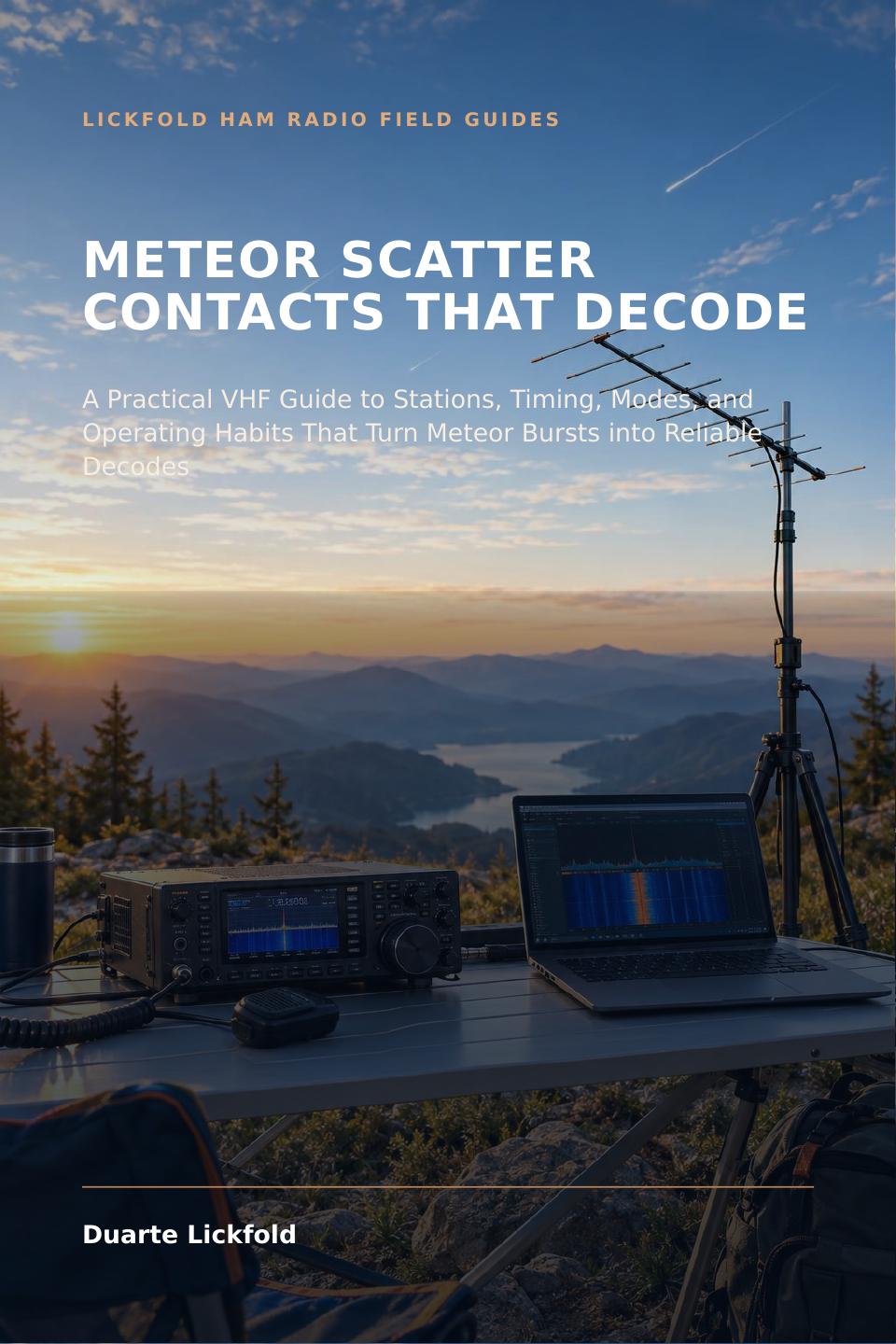
Meteor Scatter Contacts That Decode is a premium field guide for licensed operators who want a realistic, disciplined approach to VHF meteor scatter, especially on 6 meters and 2 meters. Duarte Lickfold explains the propagation model in practical terms, then connects it to the decisions that matter at the operating desk: antenna choice, feed-line efficiency, software setup, MSK144 and legacy FSK441 mode selection, UTC timing, even/odd sequences, reports, confirmations, schedules, and troubleshooting.
Instead of presenting meteor scatter as a magic path, the book treats it as probability management. You will learn why 6 meters is often more forgiving, why 2 meters places higher demands on station cleanliness and antenna performance, how short digital frames turn sub-second bursts into decodes, and why a conservative QSO procedure protects the integrity of your log.
The guide also emphasizes safety, legal operation, RF exposure awareness, equipment duty cycle, outdoor antenna practices, and current band-plan verification. A staged progression takes you from receive-only monitoring to controlled transmit tests, routine random contacts, scheduled attempts, and evidence-based station improvements.
At USD 9.97, this is a concise, practical reference for operators who want fewer guesses, better habits, and a clearer understanding of what turns meteor bursts into valid on-air contacts.
What You Will Learn
- How meteor scatter propagation works, including underdense pings, overdense bursts, geometry, path length, and frequency effects
- How to evaluate a practical station: radio, antenna, feed line, interface, computer, timing, PTT, and station cleanliness
- Why MSK144 is widely used for modern meteor scatter and how it differs from legacy FSK441 operation
- How to configure software by function: clock accuracy, audio routing, radio control, frequency discipline, decoding behavior, and logging
- How to choose operating windows using morning geometry, UTC, random meteors, shower calendars, and practical availability
- How to complete QSOs with correct sequencing, reports, R reports, RRR, 73, and conservative confirmation habits
- How antenna polarization, beam heading, path midpoint thinking, feed-line loss, and local obstructions affect results
- How to troubleshoot no-decode sessions by separating propagation limits from receive, transmit, software, and operating-state problems
- How to plan random contacts, scheduled attempts, grid chasing, and activity-event operation with realistic stop rules
- How to progress from first receive-only decodes to competent, repeatable meteor scatter operation
Who This Book Is For
- Licensed amateur radio operators interested in VHF meteor scatter on 6 meters and 2 meters
- Weak-signal operators who want to improve MSK144 results with better timing, station setup, and procedure
- Hams moving from casual monitoring to complete, correctly confirmed meteor scatter QSOs
- Operators troubleshooting traces without decodes, decodes without replies, or partial exchanges that never finish
- VHF enthusiasts comparing random operation, schedules, grid chasing, and activity-event strategies
- Operators who want conservative, safety-aware guidance rather than exaggerated claims about guaranteed contacts
Inside the Book
- 1. What Meteor Scatter Can—and Cannot—Do
- 2. The Meteor Scatter Station: Radio, Antenna, Feed Line, and Computer
- 3. Modes That Decode: MSK144, FSK441 Legacy, and Practical Mode Choice
- 4. Software Setup Without Guesswork
- 5. Timing, Showers, and Choosing When to Operate
- 6. Completing the QSO: Calling, Sequences, Reports, and Confirmation
- 7. Antennas and Aiming for Short-Burst Success
- 8. Reading Decodes and Troubleshooting Failed Attempts
- 9. Operating Strategy: Random QSOs, Schedules, Grids, and Activity Events
- 10. From First Decode to Competent Meteor Scatter Operator
Format: EPUB eBook. Author: Duarte Lickfold. Publisher: Lickfold Digital Publishers.