
Join our Exclusive Ham Radio Newsletter
A clean ham radio log does not have to be elaborate. In fact, many logging problems begin when an operator tries to make the log do everything at once: QSO memory, award tracker, QSL manager, station notebook, contest archive, portable activation record, and backup system. Those are all legitimate uses, but they work best when the basic QSO record remains simple, accurate, and separate from later claims or confirmations.
If you want your log to support awards, QSLs, and long-term station history, the goal is not perfection. The goal is trustworthy evidence. You want to be able to look at a contact months or years later and know what was actually copied, what was added later from a reliable source, what remains uncertain, and what has already been submitted or confirmed.
Start with the minimum record that matters. For most ordinary amateur radio contacts, that means the other station’s call sign, UTC date, UTC time, band or frequency, mode, signal report or exchange, and enough operating context to understand where and how the contact was made. The operating context may include your station location, whether you were portable or mobile, the park or summit if you were activating, the contest or net if relevant, and the station profile you used.
The most important habit is UTC discipline. Use UTC dates and 24-hour time, and record dates in an unambiguous format such as YYYY-MM-DD. Many confirmation mismatches and award headaches begin around local date rollover. A QSO made on Saturday evening local time may already be Sunday in UTC. If one log uses local time and another uses UTC, a perfectly valid contact can appear not to match.
Next, treat the call sign as evidence, not as a decoration. Do not strip portable suffixes or regional identifiers just to make a log look neat. W1AW/5, DL1ABC/P, and a club or special-event call may carry information that matters later. If you later learn that you copied a call incorrectly, correct it only when you have a reasonable basis: your recording, a matching QSL, a nearby pattern in the session, or a reliable source file. If you merely suspect a busted call, flag the record instead of rewriting history.
Award-ready logging also depends on separating locations. Your operating location is not the same as the other station’s location, and neither is the same as an award reference. For example, a single contact might involve your station in a park, the other station in a particular state, a grid square for VHF purposes, and a reference number for a portable program. Keep those pieces distinct. Mixing them into one notes field can work for memory, but it becomes difficult to search, export, verify, or correct later.
This distinction matters especially for portable operating. If you activate a park, summit, island, lighthouse, or special event location, create a session header or station profile before you start. Record the date, UTC start and end period, your call sign as used, operator if different, station location, reference, grid if needed, and any relevant equipment notes. Then each QSO made during that period can inherit the correct context. If you change location, reference, band, mode, or call sign, mark the change immediately. A simple separator in a paper log or field app can prevent hours of reconstruction later.
For confirmations, remember that a QSL or electronic match is a layer above the QSO. A logged QSO means you believe the contact occurred. A confirmed QSO means another source matched it under that system’s rules. Award credit is another layer beyond that. A confirmation does not automatically prove every note you added, and an award program may require details beyond the basic match.
Use separate status fields when possible. Instead of a single vague note such as “QSL,” track statuses like uploaded, sent, received, requested, confirmed, unmatched, submitted, granted, rejected, or needs review. This makes your log more useful. You can find worked-but-not-confirmed contacts, confirmed-but-not-submitted award slots, missing-reference records, and rejected contacts that need investigation.
When a match fails, investigate conservatively. Check UTC date rollover first. Then check band versus frequency, mode or submode labels, call sign suffixes, portable identifiers, and whether the contact was imported from the correct station profile. In digital modes, remember that automatic logging is a capture aid, not absolute proof. Review whether the QSO completed, whether the right station call was active, and whether duplicate or aborted contacts were imported by mistake.
Old logs require a different mindset. Before cleaning anything, preserve the original. Make a dated copy of the spreadsheet, database, paper scan, ADIF export, contest file, or notes you are about to work from. Then create a working copy for cleanup. Only after review should changes move into the clean master log. This three-layer approach protects you from accidental damage and from the temptation to make old records look more certain than they really are.
A good cleanup pass begins with an inventory. Identify the source, date range, likely time basis, station location, known weaknesses, and file format. Sort the records by date, time, band, mode, call sign, and location. Patterns will appear. You may find a block that was clearly logged in local time, a cluster of contacts from a portable trip, or modes that were imported under inconsistent names. Correct only what the evidence supports. If you cannot prove the change, note the uncertainty.
Backups are part of award-ready logging because an award-capable record is useless if it disappears. Do not rely only on the live database inside your favorite program. Keep dated ADIF exports, native database backups, contest submission files, source imports, scanned paper logs, QSL images if you use them, settings, station profiles, and a simple README that explains what everything is. Use more than one storage location, and occasionally verify that the files open and the QSO counts make sense.
Finally, make the routine small enough that you will actually do it. Before a session, confirm UTC, station profile, call sign, location, band, and mode. During the session, capture the essential facts immediately and flag uncertainty. After the session, spend ten minutes reviewing obvious errors, exporting if needed, and saving source files. Weekly, handle uploads, confirmations, and unresolved flags. Monthly, check backups, duplicates, award searches, and station notes.
That routine is far more valuable than a complicated system used inconsistently. An award-ready log is not a museum-quality database. It is a dependable operating record: clear enough to support QSLs, conservative enough to preserve evidence, and portable enough to survive software changes.
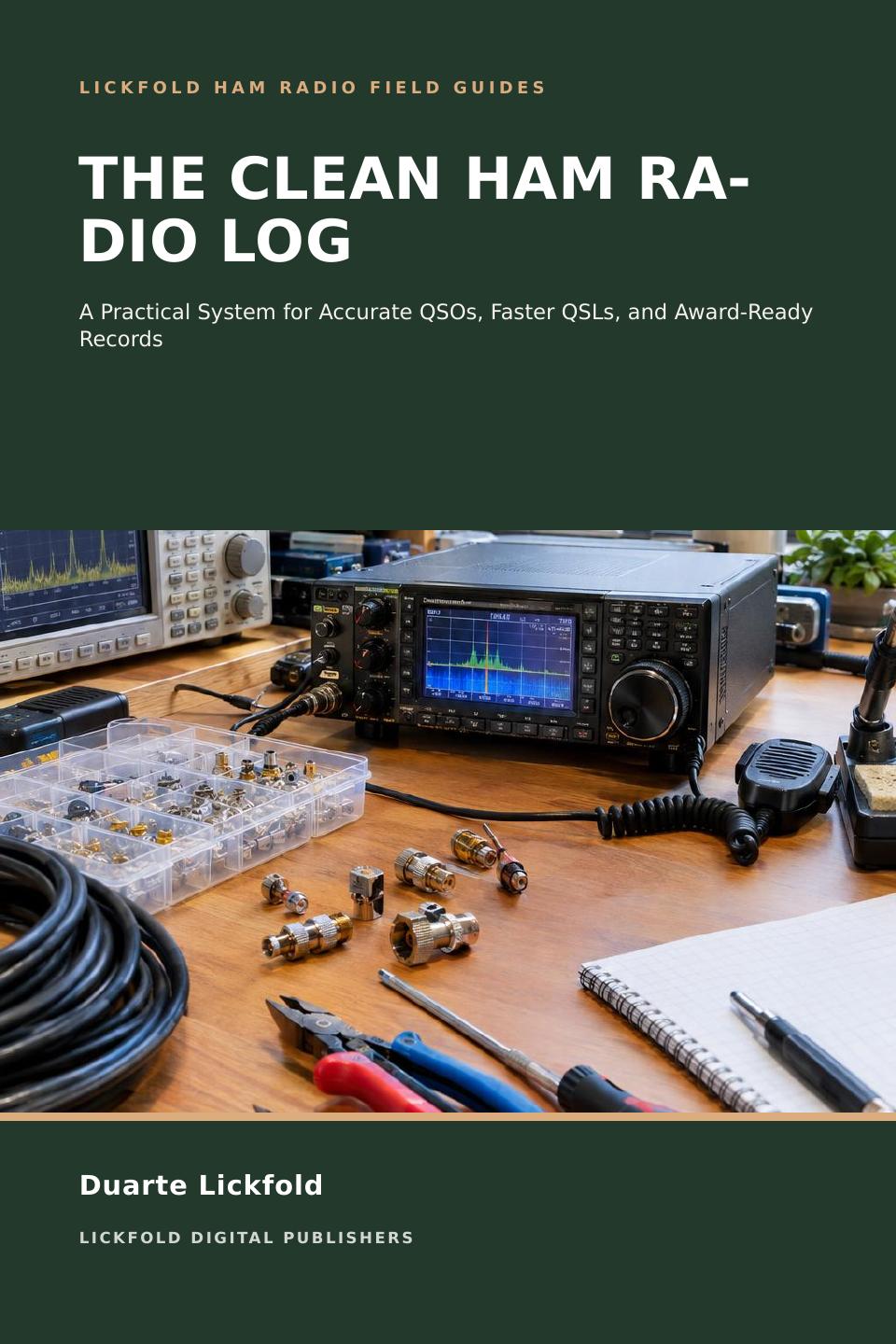
For operators who want a structured system for building that kind of log, The Clean Ham Radio Log by Duarte Lickfold expands these principles into a full practical workflow. It covers QSO fields, software choice, real-time capture, old-log cleanup, QSL mismatches, award tracking, digital and contest imports, station analysis, backups, and a sustainable operating routine for keeping the log clean going forward.
Explore the Book
Continue learning with The Clean Ham Radio Log by Duarte Lickfold, published by Lickfold Digital Publishers.
Check our selection of Hamradio e-books
-

Worldwide DX under 5watts
$9.97 -

Portable Antennas That Pack Small
$9.97 -

Tame Your First HF Dipole
$9.97 -

Backyard Antennas for Tight Spaces
$9.97 -
First POTA Activation Playbook
$9.97 -

Copy CW Through Real Band Noise
$9.97 -

Reading the HF Sky
$9.97 -
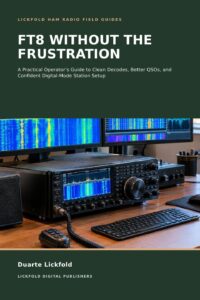
FT8 Without the Frustration
$9.97 -
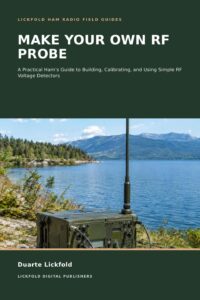
Make Your Own RF Probe
$9.97 -
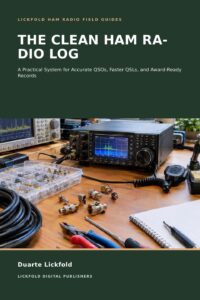
The Clean Ham Radio Log
$9.97 -
Sale!

Mastering APRS
Original price was: $59.99.$47.99Current price is: $47.99.
A Comprehensive Guide – ebook
⭐⭐⭐⭐⭐ -
Sale!

Mastering FT8
Original price was: $59.99.$47.99Current price is: $47.99.
A Comprehensive Guide to the Ultimate Digital Mode – ebook
⭐⭐⭐⭐⭐ -
Sale!

Stealth CB Antennas
Original price was: $59.99.$47.99Current price is: $47.99.
A Masterclass in Innovation and Disguise – ebook
⭐⭐⭐⭐⭐ -
Sale!

Ace Your Ham Radio Exam
Original price was: $59.99.$47.99Current price is: $47.99.
Technician, General, and Extra Class – ebook
⭐⭐⭐⭐⭐ -
Sale!

DMR for Hams
Original price was: $59.99.$47.99Current price is: $47.99.
The Ultimate Beginner’s Guide – ebook
⭐⭐⭐⭐⭐ -
Sale!

D-STAR, DMR & Fusion
Original price was: $59.99.$47.99Current price is: $47.99.
A Beginner’s Guide – ebook
⭐⭐⭐⭐⭐ -

Mastering the 6-Meter Band
$47.99
The Ultimate Guide – ebook
⭐⭐⭐⭐⭐ -
Sale!

Integrating Ham Radio with Modern Technology
Original price was: $59.99.$47.99Current price is: $47.99.
IoT, Raspberry Pi, and More – ebook
⭐⭐⭐⭐⭐ -
Sale!
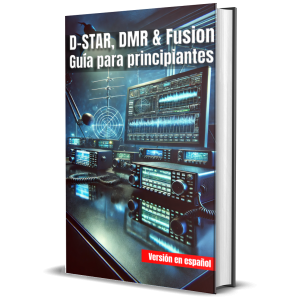
D-STAR, DMR & Fusion
Original price was: $59.99.$47.99Current price is: $47.99.
Guia para Principantes – ebook
⭐⭐⭐⭐⭐ -
Sale!
Ham Radio for Preppers
Original price was: $59.99.$47.99Current price is: $47.99.
The Essential Survival Communications Guide – ebook
⭐⭐⭐⭐⭐

Enter shop