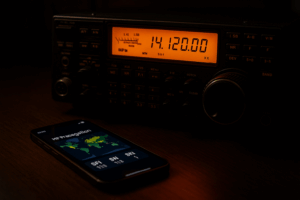
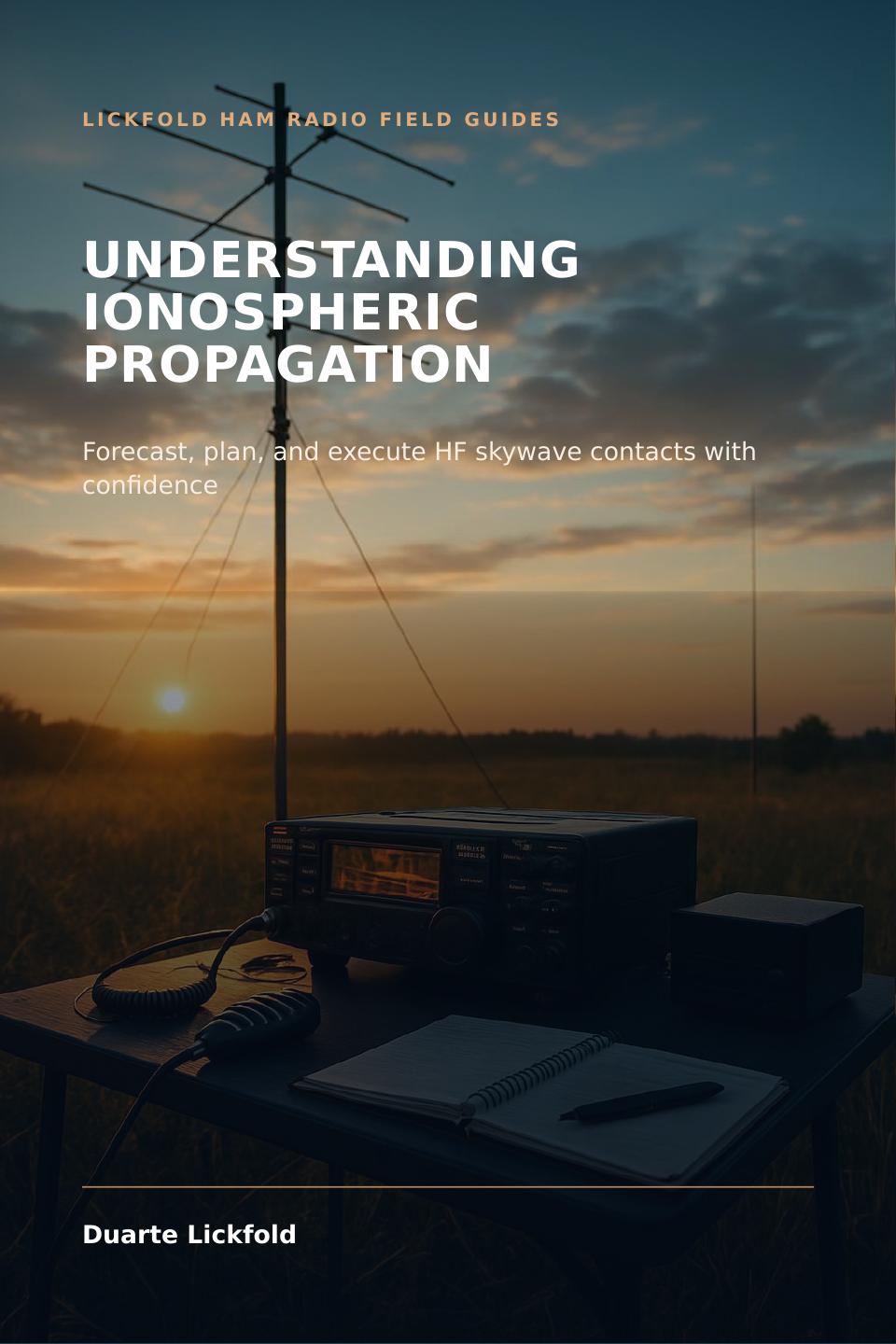

Ionospheric propagation is often treated as a mystery, but at its core it is a calculable, repeatable process. When you decode the key drivers and translate them into a disciplined workflow, you can reliably predict which bands will open and when to expect an opening. This article lays out a practical approach you can apply before your next DX expedition or weekend contest.
First, start with the forecast, not the moment of transmission. The ionosphere responds to solar input and geomagnetic activity. The S10.7 solar flux and sunspot numbers influence daytime ionization levels, notably foF2 and MUF, while geomagnetic indices Kp and Ap modulate reliability and variability. A rising solar activity forecast, a diurnal schedule, and an awareness of seasonal patterns establish a baseline you can test against actual observations. It is essential to consult multiple data sources and treat forecasts as inputs to a living plan, not scripture. A simple forecast literacy habit—check at least two independent sources and note the level of disagreement—reduces surprises on air.
Next, translate forecast into a concrete operating plan. A compact workflow works well: define your path, estimate a rough MUF from foF2, validate with oblique MUF or ray-tracing tools if your path is long or grazing, and then select a primary band and backups. The book emphasizes unit-safe calculations, so you understand the impact of geometry on MUF and hop distance. For moderate-angle hops, MUF ≈ foF2 / cos(theta) provides a quick bound, and a simple hop-distance estimate D ≈ 2*h*tan(theta) helps you bound path length. When your path approaches long transoceanic distances or grazing incidence, switch to oblique MUF products or a ray-tracing approach.
In practice, plan for a five-step cycle: pre-session briefing, in-session execution, post-session analysis, logging, and a continuous improvement loop. Before you transmit, complete safety checks: verify RF exposure limits, ensure licensing compliance, and document emergency procedures. During the session, follow a band ladder that aligns with the forecast: a primary band with a conservative safety margin, plus backups if the opening shifts or fades. For example, in a typical East Coast US to Western Europe scenario, plan around the 15-meter band during the peak of the day’s MUF, with backups on 12, 17, or 10 meters as needed. While operating, maintain detailed logs with fields for time, band, mode, transmit power, estimated MUF, observed SNR, and any anomalies. These logs become your feedback loop, informing future forecasts and decisions.
The book recommends a practical toolkit: trusted sources for forecasts, quick-run procedures for ionosonde data or VOACAP/IRI outputs, and a conservative set of analytic checks that remain accessible even when specialist tools are unavailable. If you must operate with minimal tools, you can still derive meaningful guidance from simple MUF estimates, ERP calculations, and careful logging of field observations. The emphasis on logging and structured decision points makes the process auditable and repeatable, which is especially valuable for field expeditions or contest planning.
Digital modes add another dimension. For weak links, FT8 and similar modes can leverage small margins, but you still require a clear plan for when to push a contact and when to back off. The chapter on digital modes ties propagation uncertainty directly to practical link-budget thinking, ARQ pacing, and duty-cycle considerations. This is not about chasing a single contact; it is about building a dependable workflow you can apply across bands, times of day, and atmospheric conditions.
Finally, be mindful of safety and legality. The propagation plan should never override regulatory requirements or RF exposure limits. A robust approach includes pre-session checks, post-session analyses, and ongoing education about emissions, interference, and licensing. The result is a field-tested, auditable process you can repeatedly apply to grow your understanding of how the ionosphere behaves and how to exploit openings responsibly.
If you’re seeking a reliable, structured framework to connect theory with on-air practice, Understanding Ionospheric Propagation offers a thorough, methodical guide. It translates the physics into usable routines, supported by worked examples and checklists that you can adapt to your gear, location, and goals. For operators who want to turn forecasts into consistent, predictable QSOs, this book is a strong companion that complements your own experimenting and logging. The practical emphasis on a repeatable decision cycle—forecast, plan, execute, log, and learn—will help you elevate your skywave planning. I recommend it as a core reference for any amateur radio library that aims to make ionospheric propagation both understandable and actionable.
Explore the Book
Continue learning with Understanding Ionospheric Propagation by Duarte Lickfold, published by Lickfold Digital Publishers.