
Join our Exclusive Ham Radio Newsletter
A first Parks on the Air activation can feel deceptively simple: bring a radio to a park, put up an antenna, call CQ, and make contacts. In practice, most first-activation problems come from small assumptions stacking up. The park boundary is less obvious than expected. A needed coax adapter is still on the workbench. The phone battery is low. The antenna works electrically but creates a trip hazard. The operator remembers the contact but not the UTC time.
The goal of a first activation should not be to prove how ambitious you can be. A better goal is to complete a lawful, safe, accurately logged field operation and learn enough to make the second one easier. That mindset changes the way you plan.
Start by choosing a forgiving park, not necessarily the closest or rarest one. Confirm the current POTA reference from the official program source before you build your plan. Then look for practical access information: hours, gates, fees, seasonal closures, restrooms, parking, road conditions, and whether there are rules affecting masts, wires, generators, or attaching anything to trees or structures. If the boundary is not obvious, plan to operate well inside the plausible activated area rather than on an edge where you are relying on a map interpretation.
Your operating position matters as much as the park choice. A good first site gives you room to set up without blocking visitors, keeps wires and coax away from foot traffic, avoids overhead lines, offers shade or weather protection, and lets you pack up quickly if conditions change. Public parks are shared spaces. A station layout that is technically workable but confusing or hazardous to visitors is not a good first-activation layout.
Next, decide what kind of station you are actually taking. Think in systems, not gear piles. A portable station includes the radio, battery or power source, power leads, fuses, antenna, support, feed line, matching or tuning equipment, logging method, time source, chair or table arrangement, weather protection, and operator workflow. One missing link can stop the whole operation.
For many first HF activations, a modest station is more manageable than an ultra-minimal one or a large field deployment. A 20-watt or similar portable setup, a known antenna, a battery with margin, and a paper logging backup can be easier to troubleshoot than a complicated station with many modes, accessories, and dependencies. QRP can be rewarding, but it places more weight on antenna efficiency, propagation, and operator patience. Vehicle-supported operation can add comfort and power options, but it can also tempt you to carry too much and delay setup.
Power planning deserves more attention than it usually gets. Battery capacity is not just an amp-hour number on a label. Estimate your expected receive current, transmit current, duty cycle, and operating time. Add margin. Protect terminals, fuse near the battery, verify polarity, and keep connections dry. If you plan to use a logging device or phone for spotting, include that power requirement too. A radio that still works while your logging device is dead may leave you with avoidable paperwork problems.
For antennas, choose what fits the field and your skill level. A half-wave dipole, linked dipole, end-fed half-wave, random wire with an appropriate counterpoise and matching arrangement, portable vertical, loaded whip, loop, or VHF/UHF antenna can all be reasonable in the right context. The important question is not which antenna is universally best. The better question is: can you deploy it safely, legally, and predictably at this specific park in the available time?
A first antenna should have known electrical behavior. If it needs a counterpoise, bring one and know how you will route it. If it needs a tuner, understand the tuner’s limits. If it uses links, label them clearly. If it requires height, bring a support you are allowed to use and can recover without drama. Bright line markers, strain relief, and no-trace support methods are not cosmetic details; they are part of safe field operation.
Before the activation, do a short dry run at home with the exact station you plan to use. Do not simply open the bag and look at the equipment. Assemble the station. Connect the power. Confirm the radio controls. Verify that the logging method shows UTC clearly. Check that you have the right coax, adapters, antenna parts, support lines, stakes, clips, counterpoise wires, and tools. If you transmit during the test, do so appropriately and conservatively, using a dummy load or low-power checks where suitable. The dry run is where you want to discover the missing adapter, not at the picnic table.
For a first-day band plan, keep it simple. Many HF activators consider 40 and 20 meters because they often provide useful options, but they are not magic. License privileges, antenna design, time of day, season, solar conditions, local noise, and hunter activity all matter. Build a plan that includes timed decisions. For example, after setup, you might call on the first planned band for about 10 to 15 minutes, then reassess if there is no response. Check the frequency, antenna configuration, mode, spot, power, and receiver settings before assuming propagation is the only problem.
Spotting can help hunters find you, but it should not be the only way your activation can function. Cell service may be poor. A spot may contain an error. Hunters may be busy elsewhere. Be prepared to call CQ clearly and repeatedly, and to change bands or modes based on evidence rather than frustration.
Logging should happen as part of operating, not as a memory exercise later. At minimum, keep a credible record of the date, UTC time, call sign, band, mode, and other information required by current POTA instructions. Repeat back call signs carefully. Mark duplicates rather than hiding them. Do not turn incomplete contacts into completed contacts after the fact. If your electronic logger fails, paper should be ready immediately, with a pen that works and a visible UTC reference.
When something goes wrong, stop and diagnose one variable at a time. Power problems, RF problems, human procedure problems, and environmental problems can look similar in the moment. No contacts might mean poor propagation, but it might also mean wrong antenna links, a bad connection, an overly tight squelch, incorrect mode, low power, high SWR, or an unhelpful operating frequency. Give yourself a short fault-isolation window. If you cannot fix the issue safely and calmly, simplify, switch to the backup plan, or shut down.
Finally, review the activation soon after you get home. Compare the plan with what actually happened. Note arrival-to-ready time, ready-to-first-contact time, contact rate by band and mode, battery behavior, antenna observations, logging issues, weather, public interaction, and fatigue. Choose one controlled improvement for next time. That might be brighter guy-line markers, a better paper log sheet, pre-marked antenna links, a different operating window, or one additional band. Resist the urge to solve every lesson with a purchase.
A successful first activation is not defined only by the number of QSOs. It is defined by whether you operated legally, safely, courteously, and with records you can trust. Contacts matter, but so do the habits that make future activations smoother.
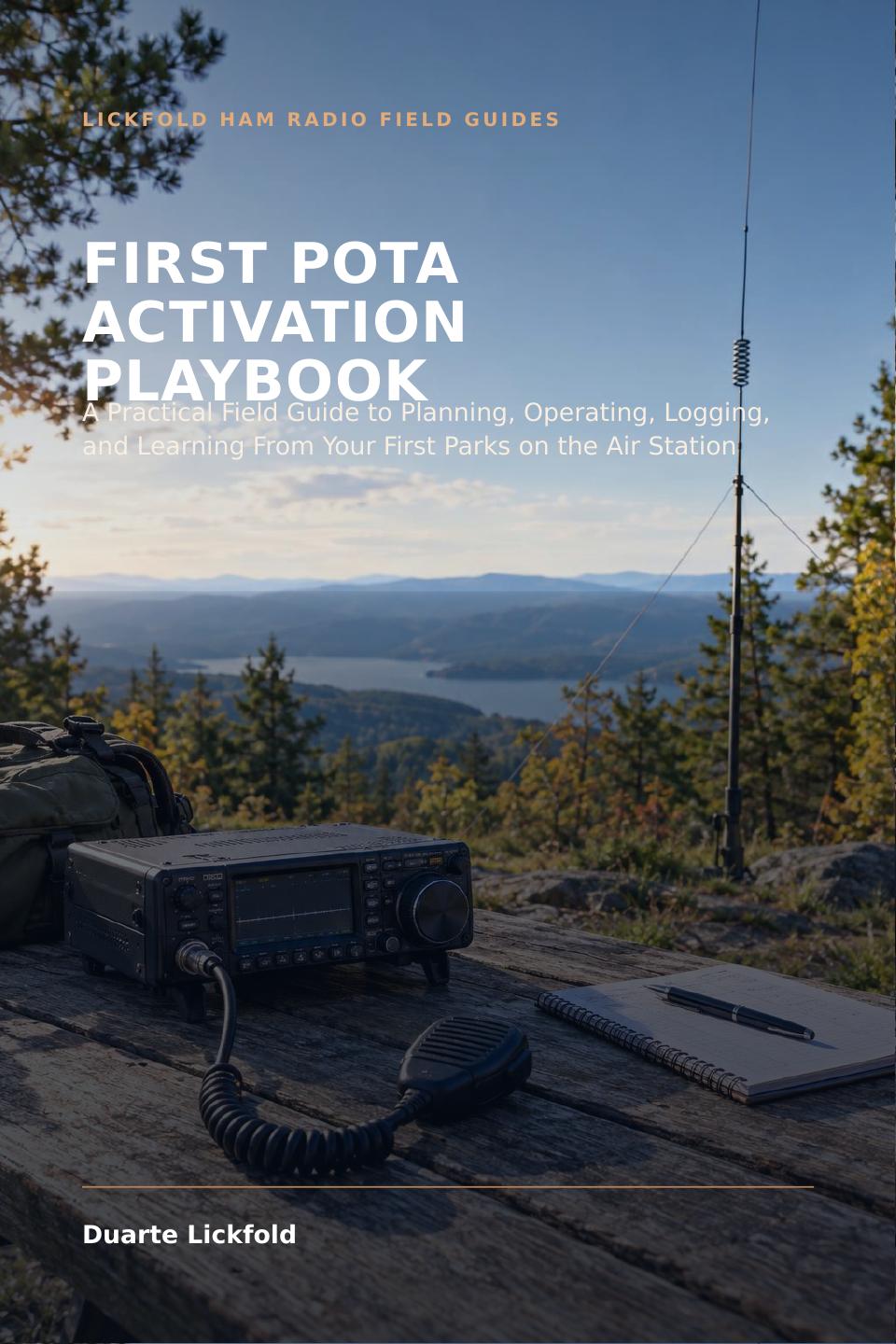
For operators who want a step-by-step field approach, First POTA Activation Playbook by Duarte Lickfold expands this planning mindset into a complete guide covering park selection, station architecture, antennas, packing, propagation strategy, on-air procedure, logging, troubleshooting, safety, and after-action review.
Explore the Book
Continue learning with First POTA Activation Playbook by Duarte Lickfold, published by Lickfold Digital Publishers.
Check our selection of Hamradio e-books
-
Sale!

Mastering APRS
Original price was: $59.99.$9.97Current price is: $9.97.
A Comprehensive Guide – ebook
⭐⭐⭐⭐⭐
2026 Edition -
Sale!

Mastering FT8
Original price was: $59.99.$9.97Current price is: $9.97.
A Comprehensive Guide to the Ultimate Digital Mode – ebook
⭐⭐⭐⭐⭐
2026 Edition -
Sale!

Stealth CB Antennas
Original price was: $59.99.$9.97Current price is: $9.97.
A Masterclass in Innovation and Disguise – ebook
⭐⭐⭐⭐⭐
2026 Edition -
Sale!

Ace Your Ham Radio Exam
Original price was: $59.99.$9.97Current price is: $9.97.
Technician, General, and Extra Class – ebook
⭐⭐⭐⭐⭐
2026 Edition -
Sale!

DMR for Hams
Original price was: $59.99.$9.97Current price is: $9.97.
The Ultimate Beginner’s Guide – ebook
⭐⭐⭐⭐⭐
2026 Edition -
Sale!

D-STAR, DMR & Fusion
Original price was: $59.99.$9.97Current price is: $9.97.
A Beginner’s Guide – ebook
⭐⭐⭐⭐⭐
2026 Edition -

Mastering the 6-Meter Band
$9.97
The Ultimate Guide – ebook
⭐⭐⭐⭐⭐
2026 Edition -
Sale!
Integrating Ham Radio with Modern Technology
Original price was: $59.99.$9.97Current price is: $9.97.
IoT, Raspberry Pi, and More – ebook
⭐⭐⭐⭐⭐
2026 Edition -
Sale!
D-STAR, DMR & Fusion
Original price was: $59.99.$9.97Current price is: $9.97.
Guia para Principantes – ebook
⭐⭐⭐⭐⭐
2026 Edition -
Sale!
Ham Radio for Preppers
Original price was: $59.99.$9.97Current price is: $9.97.
The Essential Survival Communications Guide – ebook
⭐⭐⭐⭐⭐
2026 Edition -
Sale!

Mastering Marine Radio
Original price was: $59.99.$9.97Current price is: $9.97.
A Sailor’s Guide to Confident Communication – ebook
⭐⭐⭐⭐⭐
2026 Edition -

Worldwide DX under 5watts
$9.97
⭐⭐⭐⭐⭐
2026 Edition -
Portable Antennas That Pack Small
$9.97
⭐⭐⭐⭐⭐
2026 Edition -

Tame Your First HF Dipole
$9.97
⭐⭐⭐⭐⭐
2026 Edition -

Backyard Antennas for Tight Spaces
$9.97
⭐⭐⭐⭐⭐
2026 Edition -
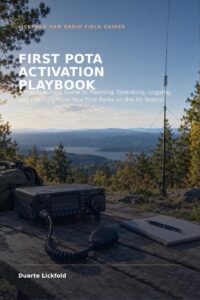
First POTA Activation Playbook
$9.97
⭐⭐⭐⭐⭐
2026 Edition -

Copy CW Through Real Band Noise
$9.97
⭐⭐⭐⭐⭐
2026 Edition -

Reading the HF Sky
$9.97
⭐⭐⭐⭐⭐
2026 Edition -
FT8 Without the Frustration
$9.97
⭐⭐⭐⭐⭐
2026 Edition -
Make Your Own RF Probe
$9.97
⭐⭐⭐⭐⭐
2026 Edition

Enter shop